26-11-2025
Circular IT lifecycle approach for modern companies
Discover why companies choose a circular IT lifecycle approach and how a Circular IT Lifecycle Partner improves sustainability and efficiency.

SAVE DCS
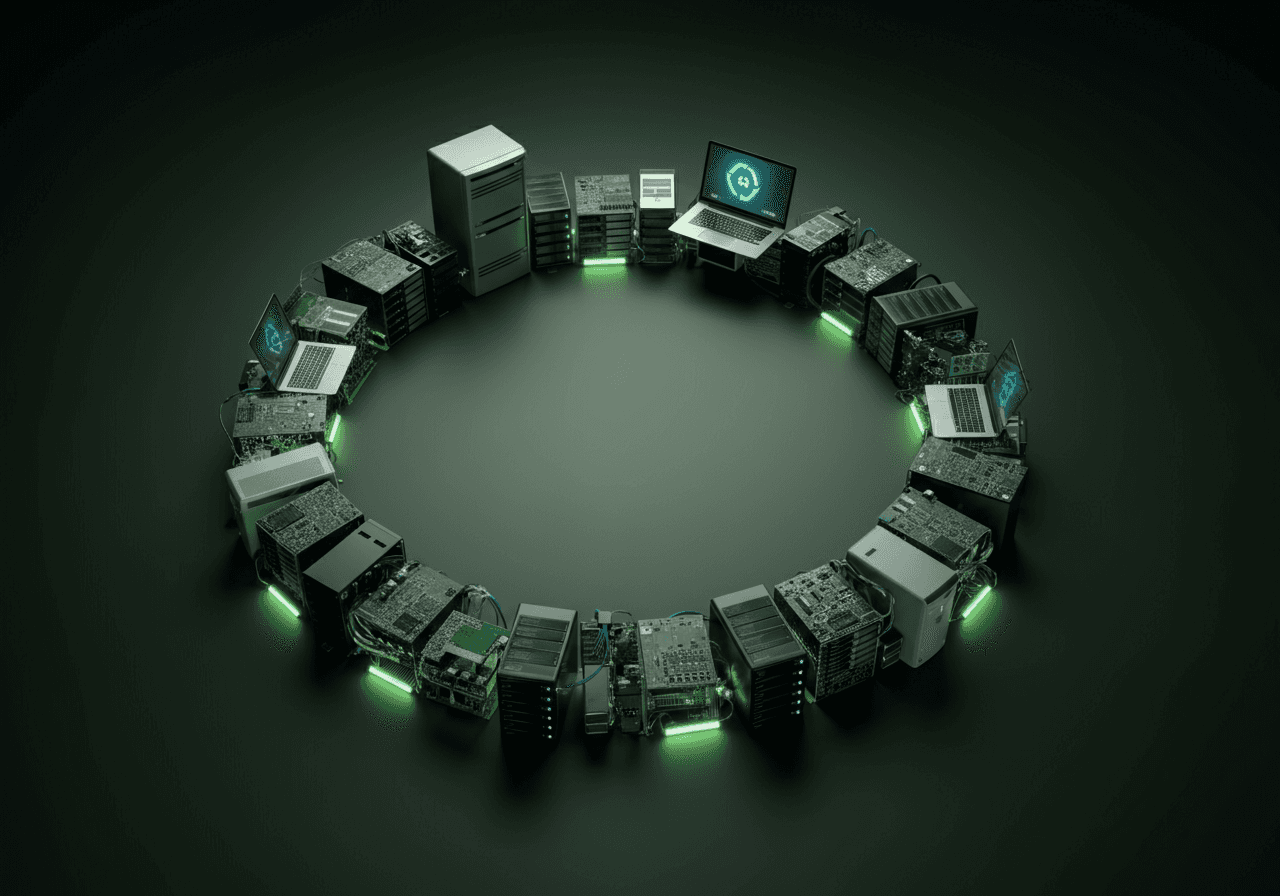
Companies face growing pressure to reduce costs, simplify processes, and operate more sustainably. IT managers stand right in the middle of that challenge. Their hardware must stay reliable without draining budgets or team capacity. A circular IT lifecycle approach solves that. Think of the difference between throwing things away and caring for a well kept garden. Instead of buying new plants every season, you maintain what you have, reuse what still works, and make sure everything stays healthy. Circular IT does the same for your hardware. Below you will find why more and more organisations are choosing this approach and how a Circular IT Lifecycle Partner makes it simple.
Table of Contents
S | |
|---|---|
1 | What is a circular IT lifecycle approach? |
2 | Why this approach is becoming more popular |
3 | Cost reduction without risk |
4 | Less e waste and a lower CO2 footprint |
5 | Maximising value from existing hardware |
6 | Longer lifespan through smart management |
7 | The importance of transparent inventory |
8 | Data wiping and security in circular IT |
9 | Refurbished hardware as a strategic choice |
10 | The role of a Circular IT Lifecycle Partner |
11 | Time savings for IT teams |
12 | The link with CSRD and reporting |
13 | Practical steps to get started |
14 | Common mistakes in lifecycle management |
15 | How your organisation benefits immediately |
1. What is a circular IT lifecycle approach?
A circular IT lifecycle approach means you only replace hardware when it is truly necessary. Devices are reused, refurbished, securely wiped, or resold so every laptop, server, or switch reaches its full potential.
2. Why this approach is becoming more popular
Companies realise that traditional refresh cycles are expensive, inefficient, and unsustainable. A circular approach gives IT teams more control and reduces waste in both time and resources.
3. Cost reduction without risk
Replacing hardware too early leads to unnecessary spending. Circular IT makes use of what you already own. By safely using refurbished hardware, organisations can save a significant portion of their budget.
4. Less e waste and a lower CO2 footprint
E waste is growing faster than any other waste stream. A circular approach ensures devices get a second life. This drastically reduces e waste and lowers emissions by avoiding new production.
5. Maximising value from existing hardware
Many IT departments have devices collecting dust, even though they function perfectly. With proper inventory and redistribution, unused assets become valuable again.
6. Longer lifespan through smart management
Small upgrades, such as SSD replacements or extra RAM, can extend the life of devices by years. Smart management prevents unnecessary refresh cycles.
7. The importance of transparent inventory
Clear inventory insights prevent surprises. IT managers get visibility into what can stay, what needs attention, and what can safely be removed or reused.
8. Data wiping and security in circular IT
Nothing moves without secure data wiping. Professional wiping ensures hardware can be reused or sold without any risk to sensitive information.
9. Refurbished hardware as a strategic choice
Refurbished hardware keeps organisations flexible. It is affordable, reliable, quickly available, and ideal when supported by the right partner.
10. The role of a Circular IT Lifecycle Partner
A Circular IT Lifecycle Partner helps with inventory, data wiping, hardware buyback, refurbished replacement, and reporting. This removes operational pressure from internal IT teams.
11. Time savings for IT teams
IT teams lack time for strategic work. Lifecycle outsourcing removes tasks like logistics, data wiping, buyback, analysis, and reporting. Teams gain back several hours each week.
12. The link with CSRD and reporting
More organisations must report on sustainability performance. IT hardware plays a major role in that footprint. A circular approach makes CSRD compliance much easier.
13. Practical steps to get started
The process is simpler than many expect. Start with:
a complete hardware inventory
checking remaining value
secure data wiping
determining which devices stay, leave, or need replacement
14. Common mistakes in lifecycle management
Typical mistakes include:
replacing too early
letting devices sit unused
ignoring hardware value
lacking a structured data security plan
15. How your organisation benefits immediately
The benefits are direct and measurable:
lower overall costs
reduced e waste
less CO2 impact
higher efficiency
more time for IT teams
Conclusion
A circular IT lifecycle approach helps organisations work smarter, reduce costs, and operate sustainably. IT managers gain more control and minimise waste. And with help from a Circular IT Lifecycle Partner, the entire process becomes straightforward, efficient, and low effort for the internal team.
Frequently Asked Questions
1. What does a circular IT lifecycle approach mean?
It means using hardware as long as possible and handling it sustainably through reuse, refurbishment, and secure processing.
2. Is refurbished hardware reliable for business use?
Yes, when properly tested and supported. Many companies run critical workloads on refurbished equipment without issues.
3. How does a Circular IT Lifecycle Partner help?
By taking over tasks like inventory, data wiping, buyback, logistics, and reporting, reducing pressure on internal teams.
4. Does circular IT really save money?
Yes. Reusing existing hardware and deploying refurbished devices significantly cuts hardware expenses.
5. How fast can a company switch to circular IT?
Most organisations can begin within days. Inventory is the ideal first step to get clarity fast.
26-11-2025
Circular IT lifecycle approach for modern companies
Discover why companies choose a circular IT lifecycle approach and how a Circular IT Lifecycle Partner improves sustainability and efficiency.
SAVE DCS
Companies face growing pressure to reduce costs, simplify processes, and operate more sustainably. IT managers stand right in the middle of that challenge. Their hardware must stay reliable without draining budgets or team capacity. A circular IT lifecycle approach solves that. Think of the difference between throwing things away and caring for a well kept garden. Instead of buying new plants every season, you maintain what you have, reuse what still works, and make sure everything stays healthy. Circular IT does the same for your hardware. Below you will find why more and more organisations are choosing this approach and how a Circular IT Lifecycle Partner makes it simple.
Table of Contents
S | |
|---|---|
1 | What is a circular IT lifecycle approach? |
2 | Why this approach is becoming more popular |
3 | Cost reduction without risk |
4 | Less e waste and a lower CO2 footprint |
5 | Maximising value from existing hardware |
6 | Longer lifespan through smart management |
7 | The importance of transparent inventory |
8 | Data wiping and security in circular IT |
9 | Refurbished hardware as a strategic choice |
10 | The role of a Circular IT Lifecycle Partner |
11 | Time savings for IT teams |
12 | The link with CSRD and reporting |
13 | Practical steps to get started |
14 | Common mistakes in lifecycle management |
15 | How your organisation benefits immediately |
1. What is a circular IT lifecycle approach?
A circular IT lifecycle approach means you only replace hardware when it is truly necessary. Devices are reused, refurbished, securely wiped, or resold so every laptop, server, or switch reaches its full potential.
2. Why this approach is becoming more popular
Companies realise that traditional refresh cycles are expensive, inefficient, and unsustainable. A circular approach gives IT teams more control and reduces waste in both time and resources.
3. Cost reduction without risk
Replacing hardware too early leads to unnecessary spending. Circular IT makes use of what you already own. By safely using refurbished hardware, organisations can save a significant portion of their budget.
4. Less e waste and a lower CO2 footprint
E waste is growing faster than any other waste stream. A circular approach ensures devices get a second life. This drastically reduces e waste and lowers emissions by avoiding new production.
5. Maximising value from existing hardware
Many IT departments have devices collecting dust, even though they function perfectly. With proper inventory and redistribution, unused assets become valuable again.
6. Longer lifespan through smart management
Small upgrades, such as SSD replacements or extra RAM, can extend the life of devices by years. Smart management prevents unnecessary refresh cycles.
7. The importance of transparent inventory
Clear inventory insights prevent surprises. IT managers get visibility into what can stay, what needs attention, and what can safely be removed or reused.
8. Data wiping and security in circular IT
Nothing moves without secure data wiping. Professional wiping ensures hardware can be reused or sold without any risk to sensitive information.
9. Refurbished hardware as a strategic choice
Refurbished hardware keeps organisations flexible. It is affordable, reliable, quickly available, and ideal when supported by the right partner.
10. The role of a Circular IT Lifecycle Partner
A Circular IT Lifecycle Partner helps with inventory, data wiping, hardware buyback, refurbished replacement, and reporting. This removes operational pressure from internal IT teams.
11. Time savings for IT teams
IT teams lack time for strategic work. Lifecycle outsourcing removes tasks like logistics, data wiping, buyback, analysis, and reporting. Teams gain back several hours each week.
12. The link with CSRD and reporting
More organisations must report on sustainability performance. IT hardware plays a major role in that footprint. A circular approach makes CSRD compliance much easier.
13. Practical steps to get started
The process is simpler than many expect. Start with:
a complete hardware inventory
checking remaining value
secure data wiping
determining which devices stay, leave, or need replacement
14. Common mistakes in lifecycle management
Typical mistakes include:
replacing too early
letting devices sit unused
ignoring hardware value
lacking a structured data security plan
15. How your organisation benefits immediately
The benefits are direct and measurable:
lower overall costs
reduced e waste
less CO2 impact
higher efficiency
more time for IT teams
Conclusion
A circular IT lifecycle approach helps organisations work smarter, reduce costs, and operate sustainably. IT managers gain more control and minimise waste. And with help from a Circular IT Lifecycle Partner, the entire process becomes straightforward, efficient, and low effort for the internal team.
Frequently Asked Questions
1. What does a circular IT lifecycle approach mean?
It means using hardware as long as possible and handling it sustainably through reuse, refurbishment, and secure processing.
2. Is refurbished hardware reliable for business use?
Yes, when properly tested and supported. Many companies run critical workloads on refurbished equipment without issues.
3. How does a Circular IT Lifecycle Partner help?
By taking over tasks like inventory, data wiping, buyback, logistics, and reporting, reducing pressure on internal teams.
4. Does circular IT really save money?
Yes. Reusing existing hardware and deploying refurbished devices significantly cuts hardware expenses.
5. How fast can a company switch to circular IT?
Most organisations can begin within days. Inventory is the ideal first step to get clarity fast.
26-11-2025
Circular IT lifecycle approach for modern companies
Discover why companies choose a circular IT lifecycle approach and how a Circular IT Lifecycle Partner improves sustainability and efficiency.
SAVE DCS
Companies face growing pressure to reduce costs, simplify processes, and operate more sustainably. IT managers stand right in the middle of that challenge. Their hardware must stay reliable without draining budgets or team capacity. A circular IT lifecycle approach solves that. Think of the difference between throwing things away and caring for a well kept garden. Instead of buying new plants every season, you maintain what you have, reuse what still works, and make sure everything stays healthy. Circular IT does the same for your hardware. Below you will find why more and more organisations are choosing this approach and how a Circular IT Lifecycle Partner makes it simple.
Table of Contents
S | |
|---|---|
1 | What is a circular IT lifecycle approach? |
2 | Why this approach is becoming more popular |
3 | Cost reduction without risk |
4 | Less e waste and a lower CO2 footprint |
5 | Maximising value from existing hardware |
6 | Longer lifespan through smart management |
7 | The importance of transparent inventory |
8 | Data wiping and security in circular IT |
9 | Refurbished hardware as a strategic choice |
10 | The role of a Circular IT Lifecycle Partner |
11 | Time savings for IT teams |
12 | The link with CSRD and reporting |
13 | Practical steps to get started |
14 | Common mistakes in lifecycle management |
15 | How your organisation benefits immediately |
1. What is a circular IT lifecycle approach?
A circular IT lifecycle approach means you only replace hardware when it is truly necessary. Devices are reused, refurbished, securely wiped, or resold so every laptop, server, or switch reaches its full potential.
2. Why this approach is becoming more popular
Companies realise that traditional refresh cycles are expensive, inefficient, and unsustainable. A circular approach gives IT teams more control and reduces waste in both time and resources.
3. Cost reduction without risk
Replacing hardware too early leads to unnecessary spending. Circular IT makes use of what you already own. By safely using refurbished hardware, organisations can save a significant portion of their budget.
4. Less e waste and a lower CO2 footprint
E waste is growing faster than any other waste stream. A circular approach ensures devices get a second life. This drastically reduces e waste and lowers emissions by avoiding new production.
5. Maximising value from existing hardware
Many IT departments have devices collecting dust, even though they function perfectly. With proper inventory and redistribution, unused assets become valuable again.
6. Longer lifespan through smart management
Small upgrades, such as SSD replacements or extra RAM, can extend the life of devices by years. Smart management prevents unnecessary refresh cycles.
7. The importance of transparent inventory
Clear inventory insights prevent surprises. IT managers get visibility into what can stay, what needs attention, and what can safely be removed or reused.
8. Data wiping and security in circular IT
Nothing moves without secure data wiping. Professional wiping ensures hardware can be reused or sold without any risk to sensitive information.
9. Refurbished hardware as a strategic choice
Refurbished hardware keeps organisations flexible. It is affordable, reliable, quickly available, and ideal when supported by the right partner.
10. The role of a Circular IT Lifecycle Partner
A Circular IT Lifecycle Partner helps with inventory, data wiping, hardware buyback, refurbished replacement, and reporting. This removes operational pressure from internal IT teams.
11. Time savings for IT teams
IT teams lack time for strategic work. Lifecycle outsourcing removes tasks like logistics, data wiping, buyback, analysis, and reporting. Teams gain back several hours each week.
12. The link with CSRD and reporting
More organisations must report on sustainability performance. IT hardware plays a major role in that footprint. A circular approach makes CSRD compliance much easier.
13. Practical steps to get started
The process is simpler than many expect. Start with:
a complete hardware inventory
checking remaining value
secure data wiping
determining which devices stay, leave, or need replacement
14. Common mistakes in lifecycle management
Typical mistakes include:
replacing too early
letting devices sit unused
ignoring hardware value
lacking a structured data security plan
15. How your organisation benefits immediately
The benefits are direct and measurable:
lower overall costs
reduced e waste
less CO2 impact
higher efficiency
more time for IT teams
Conclusion
A circular IT lifecycle approach helps organisations work smarter, reduce costs, and operate sustainably. IT managers gain more control and minimise waste. And with help from a Circular IT Lifecycle Partner, the entire process becomes straightforward, efficient, and low effort for the internal team.
Frequently Asked Questions
1. What does a circular IT lifecycle approach mean?
It means using hardware as long as possible and handling it sustainably through reuse, refurbishment, and secure processing.
2. Is refurbished hardware reliable for business use?
Yes, when properly tested and supported. Many companies run critical workloads on refurbished equipment without issues.
3. How does a Circular IT Lifecycle Partner help?
By taking over tasks like inventory, data wiping, buyback, logistics, and reporting, reducing pressure on internal teams.
4. Does circular IT really save money?
Yes. Reusing existing hardware and deploying refurbished devices significantly cuts hardware expenses.
5. How fast can a company switch to circular IT?
Most organisations can begin within days. Inventory is the ideal first step to get clarity fast.
Alle blogs

Complete gids ITAD 2026 – risico, waarde en duurzaamheid
Complete gids over ITAD in 2026. Definitie, stappenplan, compliance, value recovery, duurzaamheid en partnerkeuze binnen ITAD.
SAVE DCS

Complete gids IT lifecycle management voor IT-managers
Complete gids over IT lifecycle management. Ontdek fases, risico’s en trends en de rol van een Circular IT lifecycle Partner.
SAVE DCS

Wat IT-managers fout doen bij hardwarevervanging
Ontdek wat IT-managers fout doen bij hardwarevervanging en hoe een Circulat IT Lifeycle Partner helpt slimme keuzes te maken.
SAVE DCS
Waarom bedrijven kiezen voor een circulaire IT lifecycle aanpak
Ontdek waarom organisaties overstappen op een circulaire IT lifecycle aanpak en hoe een Circular IT Lifecycle Partner dit eenvoudig maakt.
SAVE DCS

ICT werkplekbeheer: kostenbesparend en duurzamer met refurbished werkplekken
Ontdek hoe je werkplekken slim kunt beheren.
SAVE DCS

De 5 fases van IT lifecycle management: servers, storage, netwerk en werkplekken
Hoe je IT kostenbesparend en duurzaam kan beheren.
SAVE DCS

Hoe bereken je de CO₂-uitstoot van je hardware?
Je denkt het snel te berekenen, tot je ziet hoeveel er écht bij komt kijken.
SAVE DCS

Circular Hardware Lifecycle Management: waarom 2025 het kantelpunt is voor IT-infrastructuur
Het kantelpunt voor IT is hier: blijf je verspillen of kies je voor aantoonbare circulariteit?
SAVE DCS

Wat oorlog met circulaire IT te maken heeft
Circulaire IT gaat niet alleen over duurzaamheid, maar ook over veiligheid en strategische autonomie.
SAVE DCS

CSRD en IT: Vandaag compliant blijven en morgen future-proof zijn
CSRD IT Compliance: Van energierapportage naar circulaire IT | SAVE DCS
SAVE DCS
Alle blogs
Complete gids ITAD 2026 – risico, waarde en duurzaamheid
Complete gids over ITAD in 2026. Definitie, stappenplan, compliance, value recovery, duurzaamheid en partnerkeuze binnen ITAD.
SAVE DCS
Complete gids IT lifecycle management voor IT-managers
Complete gids over IT lifecycle management. Ontdek fases, risico’s en trends en de rol van een Circular IT lifecycle Partner.
SAVE DCS
Wat IT-managers fout doen bij hardwarevervanging
Ontdek wat IT-managers fout doen bij hardwarevervanging en hoe een Circulat IT Lifeycle Partner helpt slimme keuzes te maken.
SAVE DCS
Waarom bedrijven kiezen voor een circulaire IT lifecycle aanpak
Ontdek waarom organisaties overstappen op een circulaire IT lifecycle aanpak en hoe een Circular IT Lifecycle Partner dit eenvoudig maakt.
SAVE DCS
ICT werkplekbeheer: kostenbesparend en duurzamer met refurbished werkplekken
Ontdek hoe je werkplekken slim kunt beheren.
SAVE DCS
De 5 fases van IT lifecycle management: servers, storage, netwerk en werkplekken
Hoe je IT kostenbesparend en duurzaam kan beheren.
SAVE DCS
Hoe bereken je de CO₂-uitstoot van je hardware?
Je denkt het snel te berekenen, tot je ziet hoeveel er écht bij komt kijken.
SAVE DCS
Circular Hardware Lifecycle Management: waarom 2025 het kantelpunt is voor IT-infrastructuur
Het kantelpunt voor IT is hier: blijf je verspillen of kies je voor aantoonbare circulariteit?
SAVE DCS
Wat oorlog met circulaire IT te maken heeft
Circulaire IT gaat niet alleen over duurzaamheid, maar ook over veiligheid en strategische autonomie.
SAVE DCS
CSRD en IT: Vandaag compliant blijven en morgen future-proof zijn
CSRD IT Compliance: Van energierapportage naar circulaire IT | SAVE DCS
SAVE DCS
Alle blogs
Complete gids ITAD 2026 – risico, waarde en duurzaamheid
Complete gids over ITAD in 2026. Definitie, stappenplan, compliance, value recovery, duurzaamheid en partnerkeuze binnen ITAD.
SAVE DCS
Complete gids IT lifecycle management voor IT-managers
Complete gids over IT lifecycle management. Ontdek fases, risico’s en trends en de rol van een Circular IT lifecycle Partner.
SAVE DCS
Wat IT-managers fout doen bij hardwarevervanging
Ontdek wat IT-managers fout doen bij hardwarevervanging en hoe een Circulat IT Lifeycle Partner helpt slimme keuzes te maken.
SAVE DCS
Waarom bedrijven kiezen voor een circulaire IT lifecycle aanpak
Ontdek waarom organisaties overstappen op een circulaire IT lifecycle aanpak en hoe een Circular IT Lifecycle Partner dit eenvoudig maakt.
SAVE DCS
ICT werkplekbeheer: kostenbesparend en duurzamer met refurbished werkplekken
Ontdek hoe je werkplekken slim kunt beheren.
SAVE DCS
De 5 fases van IT lifecycle management: servers, storage, netwerk en werkplekken
Hoe je IT kostenbesparend en duurzaam kan beheren.
SAVE DCS
Hoe bereken je de CO₂-uitstoot van je hardware?
Je denkt het snel te berekenen, tot je ziet hoeveel er écht bij komt kijken.
SAVE DCS
Circular Hardware Lifecycle Management: waarom 2025 het kantelpunt is voor IT-infrastructuur
Het kantelpunt voor IT is hier: blijf je verspillen of kies je voor aantoonbare circulariteit?
SAVE DCS
Wat oorlog met circulaire IT te maken heeft
Circulaire IT gaat niet alleen over duurzaamheid, maar ook over veiligheid en strategische autonomie.
SAVE DCS
CSRD en IT: Vandaag compliant blijven en morgen future-proof zijn
CSRD IT Compliance: Van energierapportage naar circulaire IT | SAVE DCS
SAVE DCS