16-12-2025
Complete Guide to IT Lifecycle Management for IT Managers
Complete guide to IT lifecycle management. Discover phases, risks, trends and the role of a Circular IT Lifecycle Partner.

SAVE DCS

IT can sometimes feel like an endless stream of decisions. New laptops, servers that “might still last a bit longer,” licenses that quietly renew, and old hardware that ends up forgotten in a cupboard. Sound familiar? You are not alone. Many IT managers work hard but spend most of their time reacting to what comes their way. IT lifecycle management brings structure to that chaos. Think of it as the maintenance logbook for your company car fleet. You do not wait until a car breaks down on the highway. You plan ahead, maintain it properly and make sure it keeps its value. In this guide, I will walk you through IT lifecycle management step by step.
Table of Contents
Headings | |
|---|---|
1 | What is IT lifecycle management? |
2 | Why IT lifecycle management is crucial for IT managers |
3 | The role of a Circular IT Lifecycle Partner |
4 | Phase 1: Strategy and planning |
5 | Phase 2: Procurement and selection |
6 | Phase 3: Implementation and usage |
7 | Phase 4: Maintenance and optimization |
8 | Phase 5: Reuse, replacement and disposal |
9 | Common risks in the IT lifecycle |
10 | Best practices for control and peace of mind |
11 | IT lifecycle management and sustainability |
12 | Trends changing IT lifecycle management |
13 | When should you involve a Circular IT Lifecycle Partner? |
14 | Audit or visual roadmap as a starting point |
15 | Conclusion: from ad hoc to long-term value |
1. What is IT lifecycle management?
IT lifecycle management is the structured management of IT assets from the very first idea until the moment they are reused or responsibly disposed of. It is not just about buying and using hardware. It is about the entire lifecycle.
Think of IT as a plant. You choose the right pot and soil, water it, prune it at the right time and eventually decide whether it gets a new place or makes room for something new. Without care, it dries out. With lifecycle thinking, it keeps adding value.
2. Why IT lifecycle management is crucial for IT managers
As an IT manager, you sit between business and technology. You need to control costs, reduce risks and make sure employees can work without friction. Without a lifecycle approach, you often end up with:
Unexpected costs
Security risks
Time lost to urgent fixes
With solid IT lifecycle management, you gain predictability. Fewer fires to put out. More control and clarity.
3. The role of a Circular IT Lifecycle Partner
A Circular IT Lifecycle Partner looks beyond the role of a traditional IT supplier. Not just “what do you buy?”, but also:
How long will you use it?
What is the residual value?
Can it create value elsewhere after first use?
This leads to less waste, lower costs and better decisions. Circular does not mean vague or idealistic. It simply means getting the maximum return from what you already have.
4. Phase 1: Strategy and planning
Without a plan, there is no control.
In this phase, you define:
Which hardware and systems you need
How long you want to use them
How IT aligns with growth or downsizing
A strong strategy prevents IT from drifting away from business goals. Ask yourself: does this IT decision support where the organization wants to be in three years?
5. Phase 2: Procurement and selection
Procurement is more than comparing prices. You also need to consider:
Expected lifespan
Ease of maintenance
Energy consumption
Potential residual value
A Circular IT Lifecycle Partner helps you look beyond the box and the invoice.
6. Phase 3: Implementation and usage
This is where the real work starts. Proper documentation, clear allocation and conscious usage are critical.
Key point: the better the usage, the longer the lifespan.
Simple agreements make a big difference. How do employees handle equipment? When do they report issues? Who is responsible for what?
7. Phase 4: Maintenance and optimization
Maintenance is often overlooked, yet it largely determines whether hardware reaches its full lifespan. Regular maintenance:
Extends usage time
Reduces failures
Improves security
Optimization also means being honest. Is everything still really in use?
8. Phase 5: Reuse, replacement and disposal
Everything eventually reaches the end of its first life. But “end” does not automatically mean waste.
Options include:
Internal reuse
External reuse
Responsible recycling
This phase often hides unexpected value, both financially and strategically.
9. Common risks in the IT lifecycle
Without a lifecycle approach, organizations often face:
Data risks during disposal
Outdated systems
Unnecessary replacements
Hidden costs
These risks build up quietly and usually cost more than expected.
10. Best practices for control and peace of mind
Proven best practices include:
Maintain an up-to-date IT asset overview
Work with fixed replacement moments
Think about end-of-life from day one
Involve the business in IT decisions
The result is less stress and more visibility.
11. IT lifecycle management and sustainability
Sustainability is not an extra task. It is a natural outcome of smart lifecycle thinking. By extending usage, enabling reuse and improving disposal, you:
Reduce e-waste
Lower CO₂ impact
Show that IT supports responsible business
12. Trends changing IT lifecycle management
Clear trends include:
Increased focus on reuse
Stricter rules around data and disposal
Transparency about environmental impact
IT as a strategic asset, not just a cost
As a result, lifecycle management is becoming essential.
13. When should you involve a Circular IT Lifecycle Partner?
Earlier than most organizations do. Not only at disposal, but already during strategy and planning. That way, decisions reinforce each other instead of creating problems later.
14. Audit or visual roadmap as a starting point
Not sure where you stand? Start small.
An audit or visual roadmap quickly provides insight into:
Your current IT situation
Risks
Opportunities for savings and improvement
It is not the finish line, but a clear starting point.
15. Conclusion: from ad hoc to long-term value
IT lifecycle management is about thinking ahead. Not working harder, but working smarter. With the right approach and a Circular IT Lifecycle Partner, IT shifts from a cost center to a strategic asset that keeps delivering value.
Frequently Asked Questions (FAQ)
1. What is the difference between IT management and IT lifecycle management?
IT management focuses on daily operations. IT lifecycle management covers the entire lifespan, from planning to disposal.
2. Is IT lifecycle management only for large organizations?
No. Smaller organizations often benefit the most from better overview and predictability.
3. When should you start thinking about lifecycle management?
Ideally before procurement. That is where you make the biggest impact.
4. What does a Circular IT Lifecycle Partner deliver in practice?
Lower costs, fewer risks, higher residual value and stronger strategic decisions.
5. How quickly do you see results from IT lifecycle management?
Often within a few months, thanks to better insight and fewer ad-hoc decisions.
16-12-2025
Complete Guide to IT Lifecycle Management for IT Managers
Complete guide to IT lifecycle management. Discover phases, risks, trends and the role of a Circular IT Lifecycle Partner.
SAVE DCS
IT can sometimes feel like an endless stream of decisions. New laptops, servers that “might still last a bit longer,” licenses that quietly renew, and old hardware that ends up forgotten in a cupboard. Sound familiar? You are not alone. Many IT managers work hard but spend most of their time reacting to what comes their way. IT lifecycle management brings structure to that chaos. Think of it as the maintenance logbook for your company car fleet. You do not wait until a car breaks down on the highway. You plan ahead, maintain it properly and make sure it keeps its value. In this guide, I will walk you through IT lifecycle management step by step.
Table of Contents
Headings | |
|---|---|
1 | What is IT lifecycle management? |
2 | Why IT lifecycle management is crucial for IT managers |
3 | The role of a Circular IT Lifecycle Partner |
4 | Phase 1: Strategy and planning |
5 | Phase 2: Procurement and selection |
6 | Phase 3: Implementation and usage |
7 | Phase 4: Maintenance and optimization |
8 | Phase 5: Reuse, replacement and disposal |
9 | Common risks in the IT lifecycle |
10 | Best practices for control and peace of mind |
11 | IT lifecycle management and sustainability |
12 | Trends changing IT lifecycle management |
13 | When should you involve a Circular IT Lifecycle Partner? |
14 | Audit or visual roadmap as a starting point |
15 | Conclusion: from ad hoc to long-term value |
1. What is IT lifecycle management?
IT lifecycle management is the structured management of IT assets from the very first idea until the moment they are reused or responsibly disposed of. It is not just about buying and using hardware. It is about the entire lifecycle.
Think of IT as a plant. You choose the right pot and soil, water it, prune it at the right time and eventually decide whether it gets a new place or makes room for something new. Without care, it dries out. With lifecycle thinking, it keeps adding value.
2. Why IT lifecycle management is crucial for IT managers
As an IT manager, you sit between business and technology. You need to control costs, reduce risks and make sure employees can work without friction. Without a lifecycle approach, you often end up with:
Unexpected costs
Security risks
Time lost to urgent fixes
With solid IT lifecycle management, you gain predictability. Fewer fires to put out. More control and clarity.
3. The role of a Circular IT Lifecycle Partner
A Circular IT Lifecycle Partner looks beyond the role of a traditional IT supplier. Not just “what do you buy?”, but also:
How long will you use it?
What is the residual value?
Can it create value elsewhere after first use?
This leads to less waste, lower costs and better decisions. Circular does not mean vague or idealistic. It simply means getting the maximum return from what you already have.
4. Phase 1: Strategy and planning
Without a plan, there is no control.
In this phase, you define:
Which hardware and systems you need
How long you want to use them
How IT aligns with growth or downsizing
A strong strategy prevents IT from drifting away from business goals. Ask yourself: does this IT decision support where the organization wants to be in three years?
5. Phase 2: Procurement and selection
Procurement is more than comparing prices. You also need to consider:
Expected lifespan
Ease of maintenance
Energy consumption
Potential residual value
A Circular IT Lifecycle Partner helps you look beyond the box and the invoice.
6. Phase 3: Implementation and usage
This is where the real work starts. Proper documentation, clear allocation and conscious usage are critical.
Key point: the better the usage, the longer the lifespan.
Simple agreements make a big difference. How do employees handle equipment? When do they report issues? Who is responsible for what?
7. Phase 4: Maintenance and optimization
Maintenance is often overlooked, yet it largely determines whether hardware reaches its full lifespan. Regular maintenance:
Extends usage time
Reduces failures
Improves security
Optimization also means being honest. Is everything still really in use?
8. Phase 5: Reuse, replacement and disposal
Everything eventually reaches the end of its first life. But “end” does not automatically mean waste.
Options include:
Internal reuse
External reuse
Responsible recycling
This phase often hides unexpected value, both financially and strategically.
9. Common risks in the IT lifecycle
Without a lifecycle approach, organizations often face:
Data risks during disposal
Outdated systems
Unnecessary replacements
Hidden costs
These risks build up quietly and usually cost more than expected.
10. Best practices for control and peace of mind
Proven best practices include:
Maintain an up-to-date IT asset overview
Work with fixed replacement moments
Think about end-of-life from day one
Involve the business in IT decisions
The result is less stress and more visibility.
11. IT lifecycle management and sustainability
Sustainability is not an extra task. It is a natural outcome of smart lifecycle thinking. By extending usage, enabling reuse and improving disposal, you:
Reduce e-waste
Lower CO₂ impact
Show that IT supports responsible business
12. Trends changing IT lifecycle management
Clear trends include:
Increased focus on reuse
Stricter rules around data and disposal
Transparency about environmental impact
IT as a strategic asset, not just a cost
As a result, lifecycle management is becoming essential.
13. When should you involve a Circular IT Lifecycle Partner?
Earlier than most organizations do. Not only at disposal, but already during strategy and planning. That way, decisions reinforce each other instead of creating problems later.
14. Audit or visual roadmap as a starting point
Not sure where you stand? Start small.
An audit or visual roadmap quickly provides insight into:
Your current IT situation
Risks
Opportunities for savings and improvement
It is not the finish line, but a clear starting point.
15. Conclusion: from ad hoc to long-term value
IT lifecycle management is about thinking ahead. Not working harder, but working smarter. With the right approach and a Circular IT Lifecycle Partner, IT shifts from a cost center to a strategic asset that keeps delivering value.
Frequently Asked Questions (FAQ)
1. What is the difference between IT management and IT lifecycle management?
IT management focuses on daily operations. IT lifecycle management covers the entire lifespan, from planning to disposal.
2. Is IT lifecycle management only for large organizations?
No. Smaller organizations often benefit the most from better overview and predictability.
3. When should you start thinking about lifecycle management?
Ideally before procurement. That is where you make the biggest impact.
4. What does a Circular IT Lifecycle Partner deliver in practice?
Lower costs, fewer risks, higher residual value and stronger strategic decisions.
5. How quickly do you see results from IT lifecycle management?
Often within a few months, thanks to better insight and fewer ad-hoc decisions.
16-12-2025
Complete Guide to IT Lifecycle Management for IT Managers
Complete guide to IT lifecycle management. Discover phases, risks, trends and the role of a Circular IT Lifecycle Partner.
SAVE DCS
IT can sometimes feel like an endless stream of decisions. New laptops, servers that “might still last a bit longer,” licenses that quietly renew, and old hardware that ends up forgotten in a cupboard. Sound familiar? You are not alone. Many IT managers work hard but spend most of their time reacting to what comes their way. IT lifecycle management brings structure to that chaos. Think of it as the maintenance logbook for your company car fleet. You do not wait until a car breaks down on the highway. You plan ahead, maintain it properly and make sure it keeps its value. In this guide, I will walk you through IT lifecycle management step by step.
Table of Contents
Headings | |
|---|---|
1 | What is IT lifecycle management? |
2 | Why IT lifecycle management is crucial for IT managers |
3 | The role of a Circular IT Lifecycle Partner |
4 | Phase 1: Strategy and planning |
5 | Phase 2: Procurement and selection |
6 | Phase 3: Implementation and usage |
7 | Phase 4: Maintenance and optimization |
8 | Phase 5: Reuse, replacement and disposal |
9 | Common risks in the IT lifecycle |
10 | Best practices for control and peace of mind |
11 | IT lifecycle management and sustainability |
12 | Trends changing IT lifecycle management |
13 | When should you involve a Circular IT Lifecycle Partner? |
14 | Audit or visual roadmap as a starting point |
15 | Conclusion: from ad hoc to long-term value |
1. What is IT lifecycle management?
IT lifecycle management is the structured management of IT assets from the very first idea until the moment they are reused or responsibly disposed of. It is not just about buying and using hardware. It is about the entire lifecycle.
Think of IT as a plant. You choose the right pot and soil, water it, prune it at the right time and eventually decide whether it gets a new place or makes room for something new. Without care, it dries out. With lifecycle thinking, it keeps adding value.
2. Why IT lifecycle management is crucial for IT managers
As an IT manager, you sit between business and technology. You need to control costs, reduce risks and make sure employees can work without friction. Without a lifecycle approach, you often end up with:
Unexpected costs
Security risks
Time lost to urgent fixes
With solid IT lifecycle management, you gain predictability. Fewer fires to put out. More control and clarity.
3. The role of a Circular IT Lifecycle Partner
A Circular IT Lifecycle Partner looks beyond the role of a traditional IT supplier. Not just “what do you buy?”, but also:
How long will you use it?
What is the residual value?
Can it create value elsewhere after first use?
This leads to less waste, lower costs and better decisions. Circular does not mean vague or idealistic. It simply means getting the maximum return from what you already have.
4. Phase 1: Strategy and planning
Without a plan, there is no control.
In this phase, you define:
Which hardware and systems you need
How long you want to use them
How IT aligns with growth or downsizing
A strong strategy prevents IT from drifting away from business goals. Ask yourself: does this IT decision support where the organization wants to be in three years?
5. Phase 2: Procurement and selection
Procurement is more than comparing prices. You also need to consider:
Expected lifespan
Ease of maintenance
Energy consumption
Potential residual value
A Circular IT Lifecycle Partner helps you look beyond the box and the invoice.
6. Phase 3: Implementation and usage
This is where the real work starts. Proper documentation, clear allocation and conscious usage are critical.
Key point: the better the usage, the longer the lifespan.
Simple agreements make a big difference. How do employees handle equipment? When do they report issues? Who is responsible for what?
7. Phase 4: Maintenance and optimization
Maintenance is often overlooked, yet it largely determines whether hardware reaches its full lifespan. Regular maintenance:
Extends usage time
Reduces failures
Improves security
Optimization also means being honest. Is everything still really in use?
8. Phase 5: Reuse, replacement and disposal
Everything eventually reaches the end of its first life. But “end” does not automatically mean waste.
Options include:
Internal reuse
External reuse
Responsible recycling
This phase often hides unexpected value, both financially and strategically.
9. Common risks in the IT lifecycle
Without a lifecycle approach, organizations often face:
Data risks during disposal
Outdated systems
Unnecessary replacements
Hidden costs
These risks build up quietly and usually cost more than expected.
10. Best practices for control and peace of mind
Proven best practices include:
Maintain an up-to-date IT asset overview
Work with fixed replacement moments
Think about end-of-life from day one
Involve the business in IT decisions
The result is less stress and more visibility.
11. IT lifecycle management and sustainability
Sustainability is not an extra task. It is a natural outcome of smart lifecycle thinking. By extending usage, enabling reuse and improving disposal, you:
Reduce e-waste
Lower CO₂ impact
Show that IT supports responsible business
12. Trends changing IT lifecycle management
Clear trends include:
Increased focus on reuse
Stricter rules around data and disposal
Transparency about environmental impact
IT as a strategic asset, not just a cost
As a result, lifecycle management is becoming essential.
13. When should you involve a Circular IT Lifecycle Partner?
Earlier than most organizations do. Not only at disposal, but already during strategy and planning. That way, decisions reinforce each other instead of creating problems later.
14. Audit or visual roadmap as a starting point
Not sure where you stand? Start small.
An audit or visual roadmap quickly provides insight into:
Your current IT situation
Risks
Opportunities for savings and improvement
It is not the finish line, but a clear starting point.
15. Conclusion: from ad hoc to long-term value
IT lifecycle management is about thinking ahead. Not working harder, but working smarter. With the right approach and a Circular IT Lifecycle Partner, IT shifts from a cost center to a strategic asset that keeps delivering value.
Frequently Asked Questions (FAQ)
1. What is the difference between IT management and IT lifecycle management?
IT management focuses on daily operations. IT lifecycle management covers the entire lifespan, from planning to disposal.
2. Is IT lifecycle management only for large organizations?
No. Smaller organizations often benefit the most from better overview and predictability.
3. When should you start thinking about lifecycle management?
Ideally before procurement. That is where you make the biggest impact.
4. What does a Circular IT Lifecycle Partner deliver in practice?
Lower costs, fewer risks, higher residual value and stronger strategic decisions.
5. How quickly do you see results from IT lifecycle management?
Often within a few months, thanks to better insight and fewer ad-hoc decisions.
Alle blogs

Complete gids ITAD 2026 – risico, waarde en duurzaamheid
Complete gids over ITAD in 2026. Definitie, stappenplan, compliance, value recovery, duurzaamheid en partnerkeuze binnen ITAD.
SAVE DCS
Complete gids IT lifecycle management voor IT-managers
Complete gids over IT lifecycle management. Ontdek fases, risico’s en trends en de rol van een Circular IT lifecycle Partner.
SAVE DCS

Wat IT-managers fout doen bij hardwarevervanging
Ontdek wat IT-managers fout doen bij hardwarevervanging en hoe een Circulat IT Lifeycle Partner helpt slimme keuzes te maken.
SAVE DCS
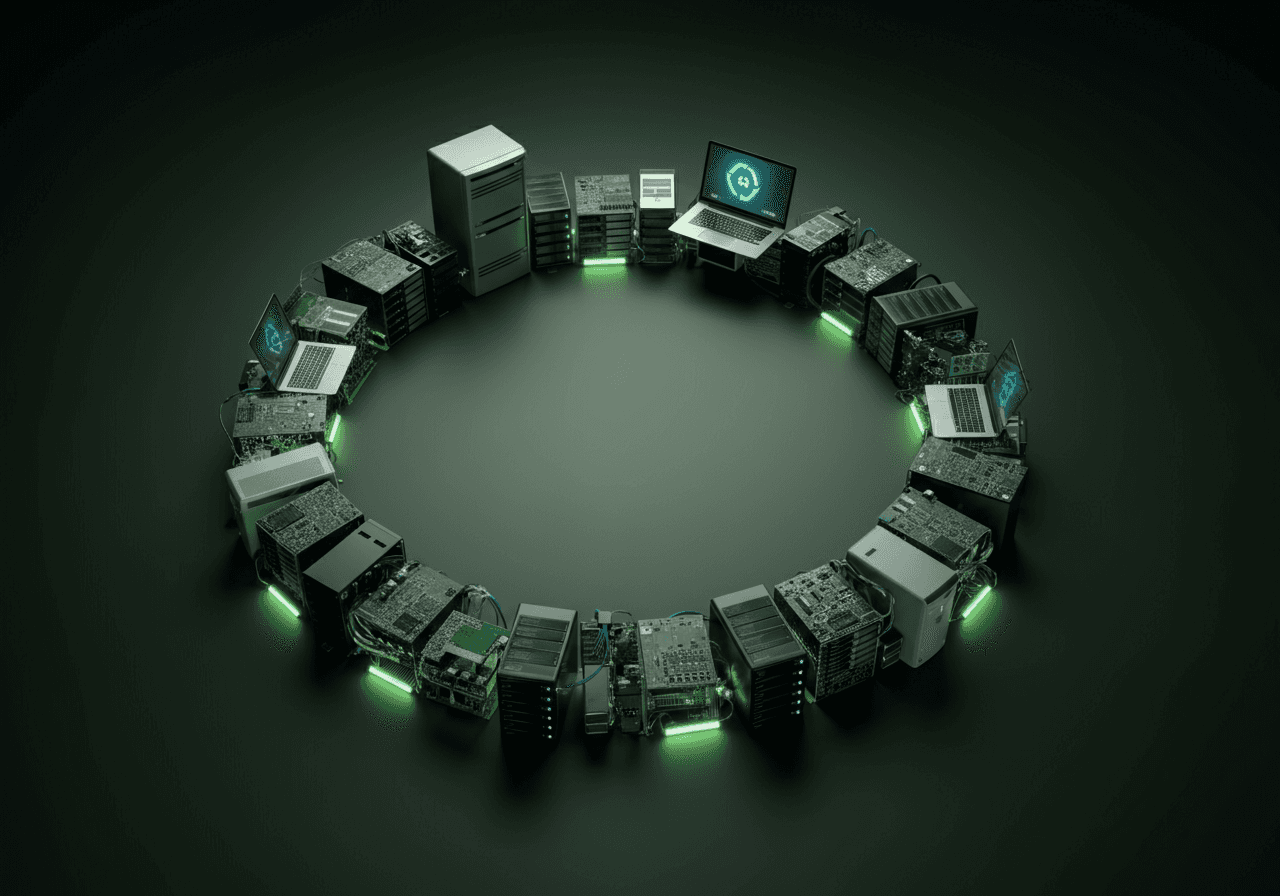
Waarom bedrijven kiezen voor een circulaire IT lifecycle aanpak
Ontdek waarom organisaties overstappen op een circulaire IT lifecycle aanpak en hoe een Circular IT Lifecycle Partner dit eenvoudig maakt.
SAVE DCS
ICT werkplekbeheer: kostenbesparend en duurzamer met refurbished werkplekken
Ontdek hoe je werkplekken slim kunt beheren.
SAVE DCS
De 5 fases van IT lifecycle management: servers, storage, netwerk en werkplekken
Hoe je IT kostenbesparend en duurzaam kan beheren.
SAVE DCS

Hoe bereken je de CO₂-uitstoot van je hardware?
Je denkt het snel te berekenen, tot je ziet hoeveel er écht bij komt kijken.
SAVE DCS

Circular Hardware Lifecycle Management: waarom 2025 het kantelpunt is voor IT-infrastructuur
Het kantelpunt voor IT is hier: blijf je verspillen of kies je voor aantoonbare circulariteit?
SAVE DCS

Wat oorlog met circulaire IT te maken heeft
Circulaire IT gaat niet alleen over duurzaamheid, maar ook over veiligheid en strategische autonomie.
SAVE DCS

CSRD en IT: Vandaag compliant blijven en morgen future-proof zijn
CSRD IT Compliance: Van energierapportage naar circulaire IT | SAVE DCS
SAVE DCS
Alle blogs
Complete gids ITAD 2026 – risico, waarde en duurzaamheid
Complete gids over ITAD in 2026. Definitie, stappenplan, compliance, value recovery, duurzaamheid en partnerkeuze binnen ITAD.
SAVE DCS
Complete gids IT lifecycle management voor IT-managers
Complete gids over IT lifecycle management. Ontdek fases, risico’s en trends en de rol van een Circular IT lifecycle Partner.
SAVE DCS
Wat IT-managers fout doen bij hardwarevervanging
Ontdek wat IT-managers fout doen bij hardwarevervanging en hoe een Circulat IT Lifeycle Partner helpt slimme keuzes te maken.
SAVE DCS
Waarom bedrijven kiezen voor een circulaire IT lifecycle aanpak
Ontdek waarom organisaties overstappen op een circulaire IT lifecycle aanpak en hoe een Circular IT Lifecycle Partner dit eenvoudig maakt.
SAVE DCS
ICT werkplekbeheer: kostenbesparend en duurzamer met refurbished werkplekken
Ontdek hoe je werkplekken slim kunt beheren.
SAVE DCS
De 5 fases van IT lifecycle management: servers, storage, netwerk en werkplekken
Hoe je IT kostenbesparend en duurzaam kan beheren.
SAVE DCS
Hoe bereken je de CO₂-uitstoot van je hardware?
Je denkt het snel te berekenen, tot je ziet hoeveel er écht bij komt kijken.
SAVE DCS
Circular Hardware Lifecycle Management: waarom 2025 het kantelpunt is voor IT-infrastructuur
Het kantelpunt voor IT is hier: blijf je verspillen of kies je voor aantoonbare circulariteit?
SAVE DCS
Wat oorlog met circulaire IT te maken heeft
Circulaire IT gaat niet alleen over duurzaamheid, maar ook over veiligheid en strategische autonomie.
SAVE DCS
CSRD en IT: Vandaag compliant blijven en morgen future-proof zijn
CSRD IT Compliance: Van energierapportage naar circulaire IT | SAVE DCS
SAVE DCS
Alle blogs
Complete gids ITAD 2026 – risico, waarde en duurzaamheid
Complete gids over ITAD in 2026. Definitie, stappenplan, compliance, value recovery, duurzaamheid en partnerkeuze binnen ITAD.
SAVE DCS
Complete gids IT lifecycle management voor IT-managers
Complete gids over IT lifecycle management. Ontdek fases, risico’s en trends en de rol van een Circular IT lifecycle Partner.
SAVE DCS
Wat IT-managers fout doen bij hardwarevervanging
Ontdek wat IT-managers fout doen bij hardwarevervanging en hoe een Circulat IT Lifeycle Partner helpt slimme keuzes te maken.
SAVE DCS
Waarom bedrijven kiezen voor een circulaire IT lifecycle aanpak
Ontdek waarom organisaties overstappen op een circulaire IT lifecycle aanpak en hoe een Circular IT Lifecycle Partner dit eenvoudig maakt.
SAVE DCS
ICT werkplekbeheer: kostenbesparend en duurzamer met refurbished werkplekken
Ontdek hoe je werkplekken slim kunt beheren.
SAVE DCS
De 5 fases van IT lifecycle management: servers, storage, netwerk en werkplekken
Hoe je IT kostenbesparend en duurzaam kan beheren.
SAVE DCS
Hoe bereken je de CO₂-uitstoot van je hardware?
Je denkt het snel te berekenen, tot je ziet hoeveel er écht bij komt kijken.
SAVE DCS
Circular Hardware Lifecycle Management: waarom 2025 het kantelpunt is voor IT-infrastructuur
Het kantelpunt voor IT is hier: blijf je verspillen of kies je voor aantoonbare circulariteit?
SAVE DCS
Wat oorlog met circulaire IT te maken heeft
Circulaire IT gaat niet alleen over duurzaamheid, maar ook over veiligheid en strategische autonomie.
SAVE DCS
CSRD en IT: Vandaag compliant blijven en morgen future-proof zijn
CSRD IT Compliance: Van energierapportage naar circulaire IT | SAVE DCS
SAVE DCS