13-01-2026
Complete ITAD Guide 2026 – Risk, Value and Sustainability
Complete guide to ITAD in 2026. Discover risks, value creation, sustainability and the role of a Circular IT Lifecycle Partner.

SAVE DCS

IT disposal often feels like the final clean-up step. Hardware gets collected, processed and forgotten. But in 2026, **IT Asset Disposition (ITAD)** is no longer a simple operational task. Old IT contains data, financial value and real risk. One wrong move can lead to data breaches, compliance issues or lost revenue. Think of ITAD as the final checkpoint. Everything that was decided earlier in the IT lifecycle becomes visible here. In this guide, you will learn what ITAD means today, where the risks are, how value can be recovered and why sustainability plays a central role.
Table of Contents
Sr# | Headings |
|---|---|
1 | What is ITAD in 2026? |
2 | Why ITAD is becoming more critical |
3 | The biggest risks in ITAD |
4 | Value creation: more than disposal |
5 | ITAD and sustainability |
6 | The role of a Circular IT Lifecycle Partner |
7 | ITAD as part of the IT lifecycle |
8 | Best practices for ITAD in 2026 |
9 | Conclusion: ITAD as a strategic moment |
1. What is ITAD in 2026?
IT Asset Disposition (ITAD) covers everything that happens to IT equipment at the end of its usage phase. In 2026, ITAD goes far beyond collection and recycling.
Modern ITAD includes:
Secure data erasure
Clear transfer of responsibility
Reuse and resale
Sustainable processing
You can compare it to a relocation. It is not just about moving boxes, but knowing what is inside, what still has value and what must be handled securely.
2. Why ITAD is becoming more critical
Several developments have made ITAD more important than ever:
Stricter data protection regulations
Increased focus on sustainability
Higher residual value of IT equipment
More audits and reporting requirements
ITAD has shifted from an operational task to a risk and value moment. Mistakes are easier to detect and often more expensive.
3. The biggest risks in ITAD
Most ITAD issues are caused by lack of structure, not bad intentions. Common risks include:
Data remaining on storage devices
No proof of secure data erasure
Unclear responsibility during transfer
Assets disappearing from records
One overlooked laptop can already result in reputational damage or fines. ITAD requires control, not assumptions.
4. Value creation: more than disposal
ITAD is often seen as a cost, while it actually contains hidden value.
Examples include:
Residual value of hardware
Resale after refurbishment
Reuse in other organizations
A strong ITAD approach reveals what can still be used. This reduces costs and prevents waste. What seems written off today may still deliver value tomorrow.
5. ITAD and sustainability
In 2026, sustainability is no longer optional. ITAD plays a key role.
By:
Maximizing reuse
Treating recycling as a last step
Reporting transparently
you reduce e-waste and CO₂ emissions. Sustainable ITAD is not an extra process, but the result of smart decision-making.
6. The role of a Circular IT Lifecycle Partner
A Circular IT Lifecycle Partner connects ITAD to the broader IT lifecycle, not just the final step.
This role includes:
Thinking about disposal early on
Providing certified data erasure
Maximizing residual value
Delivering auditable compliance
As a result, ITAD becomes predictable and controlled instead of stressful and reactive.
7. ITAD as part of the IT lifecycle
ITAD works best when it is embedded in the IT lifecycle, not treated as a one-off activity.
That means:
Considering end-of-life during procurement
Tracking assets during usage
Closing the lifecycle in a controlled way
This prevents ITAD from becoming a rushed clean-up under pressure.
8. Best practices for ITAD in 2026
Proven best practices include:
Working with standardized ITAD processes
Clearly assigning responsibilities
Using certified data erasure methods
Documenting every step
Measuring value and impact
Peace of mind comes from structure, not speed.
9. Conclusion: ITAD as a strategic moment
In 2026, ITAD is no longer an afterthought. It is a strategic moment where risk, value and sustainability come together. Organizations that take ITAD seriously avoid problems and extract more value from their IT.
With the right structure and a Circular IT Lifecycle Partner, ITAD becomes not an endpoint, but a logical and valuable part of your IT strategy.
Frequently Asked Questions (FAQ)
1. What is the difference between ITAD and recycling?
Recycling is only one step. ITAD also includes data erasure, reuse, value recovery and compliance.
2. Is ITAD mandatory by law?
Indirectly, yes. Regulations on data protection and sustainability make controlled ITAD essential.
3. When does ITAD really start?
Not at disposal, but already during procurement and asset registration.
4. How do I know if my ITAD process is secure?
By using certified data erasure, proper documentation and clear accountability.
5. Why combine ITAD with a Circular IT Lifecycle Partner?
Because ITAD then becomes part of a controlled, sustainable and value-driven IT lifecycle.
Read more

Complete Guide to IT Lifecycle Management for IT Managers
Complete guide to IT lifecycle management. Discover phases, risks, trends and the role of a Circular IT Lifecycle Partner.
SAVE DCS

What IT Managers Get Wrong About Hardware Replacement
Discover what IT managers get wrong about hardware replacement and how a Circulat IT Lifeycle Partner helps make smarter decisions.
SAVE DCS
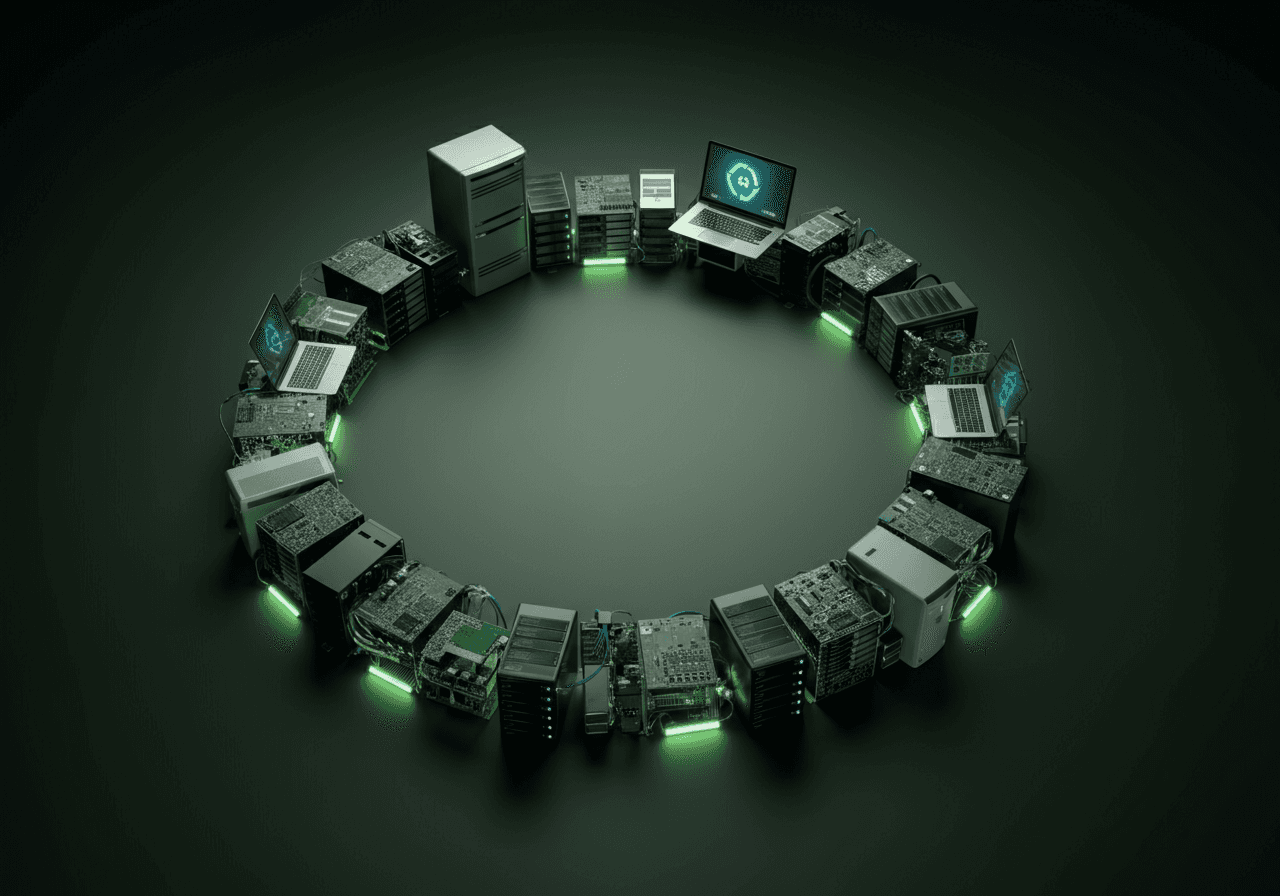
Circular IT lifecycle approach for modern companies
Discover why companies choose a circular IT lifecycle approach and how a Circular IT Lifecycle Partner improves sustainability and efficiency.
SAVE DCS
ICT Workplace Management: Cost-Efficient and Sustainable with Refurbished Workplaces
Discover how to manage workplaces smarter.
SAVE DCS

The 5 Phases of IT Lifecycle Management: Servers, Storage, Network and Workstations
How to Manage IT Cost-Effectively and Sustainably
SAVE DCS

How do you calculate the CO₂ emissions of your hardware?
You think you can calculate it quickly, until you see how much actually goes into it.
SAVE DCS

Circular Hardware Lifecycle Management: why 2025 is the tipping point for IT infrastructure
Will you keep wasting resources or move to proven circularity?
SAVE DCS

What War Has to Do with Circular IT
Circular IT is not just about sustainability, it is also about security and strategic autonomy.
SAVE DCS

CSRD and IT: How to Stay Compliant Today and Future-Proof for Tomorrow
CSRD IT Compliance: From Energy Reporting to Circular IT | SAVE DCS
SAVE DCS
13-01-2026
Complete ITAD Guide 2026 – Risk, Value and Sustainability
Complete guide to ITAD in 2026. Discover risks, value creation, sustainability and the role of a Circular IT Lifecycle Partner.
SAVE DCS
IT disposal often feels like the final clean-up step. Hardware gets collected, processed and forgotten. But in 2026, **IT Asset Disposition (ITAD)** is no longer a simple operational task. Old IT contains data, financial value and real risk. One wrong move can lead to data breaches, compliance issues or lost revenue. Think of ITAD as the final checkpoint. Everything that was decided earlier in the IT lifecycle becomes visible here. In this guide, you will learn what ITAD means today, where the risks are, how value can be recovered and why sustainability plays a central role.
Table of Contents
Sr# | Headings |
|---|---|
1 | What is ITAD in 2026? |
2 | Why ITAD is becoming more critical |
3 | The biggest risks in ITAD |
4 | Value creation: more than disposal |
5 | ITAD and sustainability |
6 | The role of a Circular IT Lifecycle Partner |
7 | ITAD as part of the IT lifecycle |
8 | Best practices for ITAD in 2026 |
9 | Conclusion: ITAD as a strategic moment |
1. What is ITAD in 2026?
IT Asset Disposition (ITAD) covers everything that happens to IT equipment at the end of its usage phase. In 2026, ITAD goes far beyond collection and recycling.
Modern ITAD includes:
Secure data erasure
Clear transfer of responsibility
Reuse and resale
Sustainable processing
You can compare it to a relocation. It is not just about moving boxes, but knowing what is inside, what still has value and what must be handled securely.
2. Why ITAD is becoming more critical
Several developments have made ITAD more important than ever:
Stricter data protection regulations
Increased focus on sustainability
Higher residual value of IT equipment
More audits and reporting requirements
ITAD has shifted from an operational task to a risk and value moment. Mistakes are easier to detect and often more expensive.
3. The biggest risks in ITAD
Most ITAD issues are caused by lack of structure, not bad intentions. Common risks include:
Data remaining on storage devices
No proof of secure data erasure
Unclear responsibility during transfer
Assets disappearing from records
One overlooked laptop can already result in reputational damage or fines. ITAD requires control, not assumptions.
4. Value creation: more than disposal
ITAD is often seen as a cost, while it actually contains hidden value.
Examples include:
Residual value of hardware
Resale after refurbishment
Reuse in other organizations
A strong ITAD approach reveals what can still be used. This reduces costs and prevents waste. What seems written off today may still deliver value tomorrow.
5. ITAD and sustainability
In 2026, sustainability is no longer optional. ITAD plays a key role.
By:
Maximizing reuse
Treating recycling as a last step
Reporting transparently
you reduce e-waste and CO₂ emissions. Sustainable ITAD is not an extra process, but the result of smart decision-making.
6. The role of a Circular IT Lifecycle Partner
A Circular IT Lifecycle Partner connects ITAD to the broader IT lifecycle, not just the final step.
This role includes:
Thinking about disposal early on
Providing certified data erasure
Maximizing residual value
Delivering auditable compliance
As a result, ITAD becomes predictable and controlled instead of stressful and reactive.
7. ITAD as part of the IT lifecycle
ITAD works best when it is embedded in the IT lifecycle, not treated as a one-off activity.
That means:
Considering end-of-life during procurement
Tracking assets during usage
Closing the lifecycle in a controlled way
This prevents ITAD from becoming a rushed clean-up under pressure.
8. Best practices for ITAD in 2026
Proven best practices include:
Working with standardized ITAD processes
Clearly assigning responsibilities
Using certified data erasure methods
Documenting every step
Measuring value and impact
Peace of mind comes from structure, not speed.
9. Conclusion: ITAD as a strategic moment
In 2026, ITAD is no longer an afterthought. It is a strategic moment where risk, value and sustainability come together. Organizations that take ITAD seriously avoid problems and extract more value from their IT.
With the right structure and a Circular IT Lifecycle Partner, ITAD becomes not an endpoint, but a logical and valuable part of your IT strategy.
Frequently Asked Questions (FAQ)
1. What is the difference between ITAD and recycling?
Recycling is only one step. ITAD also includes data erasure, reuse, value recovery and compliance.
2. Is ITAD mandatory by law?
Indirectly, yes. Regulations on data protection and sustainability make controlled ITAD essential.
3. When does ITAD really start?
Not at disposal, but already during procurement and asset registration.
4. How do I know if my ITAD process is secure?
By using certified data erasure, proper documentation and clear accountability.
5. Why combine ITAD with a Circular IT Lifecycle Partner?
Because ITAD then becomes part of a controlled, sustainable and value-driven IT lifecycle.
Read more
Complete Guide to IT Lifecycle Management for IT Managers
Complete guide to IT lifecycle management. Discover phases, risks, trends and the role of a Circular IT Lifecycle Partner.
SAVE DCS
What IT Managers Get Wrong About Hardware Replacement
Discover what IT managers get wrong about hardware replacement and how a Circulat IT Lifeycle Partner helps make smarter decisions.
SAVE DCS
Circular IT lifecycle approach for modern companies
Discover why companies choose a circular IT lifecycle approach and how a Circular IT Lifecycle Partner improves sustainability and efficiency.
SAVE DCS
ICT Workplace Management: Cost-Efficient and Sustainable with Refurbished Workplaces
Discover how to manage workplaces smarter.
SAVE DCS
13-01-2026
Complete ITAD Guide 2026 – Risk, Value and Sustainability
Complete guide to ITAD in 2026. Discover risks, value creation, sustainability and the role of a Circular IT Lifecycle Partner.
SAVE DCS
IT disposal often feels like the final clean-up step. Hardware gets collected, processed and forgotten. But in 2026, **IT Asset Disposition (ITAD)** is no longer a simple operational task. Old IT contains data, financial value and real risk. One wrong move can lead to data breaches, compliance issues or lost revenue. Think of ITAD as the final checkpoint. Everything that was decided earlier in the IT lifecycle becomes visible here. In this guide, you will learn what ITAD means today, where the risks are, how value can be recovered and why sustainability plays a central role.
Table of Contents
Sr# | Headings |
|---|---|
1 | What is ITAD in 2026? |
2 | Why ITAD is becoming more critical |
3 | The biggest risks in ITAD |
4 | Value creation: more than disposal |
5 | ITAD and sustainability |
6 | The role of a Circular IT Lifecycle Partner |
7 | ITAD as part of the IT lifecycle |
8 | Best practices for ITAD in 2026 |
9 | Conclusion: ITAD as a strategic moment |
1. What is ITAD in 2026?
IT Asset Disposition (ITAD) covers everything that happens to IT equipment at the end of its usage phase. In 2026, ITAD goes far beyond collection and recycling.
Modern ITAD includes:
Secure data erasure
Clear transfer of responsibility
Reuse and resale
Sustainable processing
You can compare it to a relocation. It is not just about moving boxes, but knowing what is inside, what still has value and what must be handled securely.
2. Why ITAD is becoming more critical
Several developments have made ITAD more important than ever:
Stricter data protection regulations
Increased focus on sustainability
Higher residual value of IT equipment
More audits and reporting requirements
ITAD has shifted from an operational task to a risk and value moment. Mistakes are easier to detect and often more expensive.
3. The biggest risks in ITAD
Most ITAD issues are caused by lack of structure, not bad intentions. Common risks include:
Data remaining on storage devices
No proof of secure data erasure
Unclear responsibility during transfer
Assets disappearing from records
One overlooked laptop can already result in reputational damage or fines. ITAD requires control, not assumptions.
4. Value creation: more than disposal
ITAD is often seen as a cost, while it actually contains hidden value.
Examples include:
Residual value of hardware
Resale after refurbishment
Reuse in other organizations
A strong ITAD approach reveals what can still be used. This reduces costs and prevents waste. What seems written off today may still deliver value tomorrow.
5. ITAD and sustainability
In 2026, sustainability is no longer optional. ITAD plays a key role.
By:
Maximizing reuse
Treating recycling as a last step
Reporting transparently
you reduce e-waste and CO₂ emissions. Sustainable ITAD is not an extra process, but the result of smart decision-making.
6. The role of a Circular IT Lifecycle Partner
A Circular IT Lifecycle Partner connects ITAD to the broader IT lifecycle, not just the final step.
This role includes:
Thinking about disposal early on
Providing certified data erasure
Maximizing residual value
Delivering auditable compliance
As a result, ITAD becomes predictable and controlled instead of stressful and reactive.
7. ITAD as part of the IT lifecycle
ITAD works best when it is embedded in the IT lifecycle, not treated as a one-off activity.
That means:
Considering end-of-life during procurement
Tracking assets during usage
Closing the lifecycle in a controlled way
This prevents ITAD from becoming a rushed clean-up under pressure.
8. Best practices for ITAD in 2026
Proven best practices include:
Working with standardized ITAD processes
Clearly assigning responsibilities
Using certified data erasure methods
Documenting every step
Measuring value and impact
Peace of mind comes from structure, not speed.
9. Conclusion: ITAD as a strategic moment
In 2026, ITAD is no longer an afterthought. It is a strategic moment where risk, value and sustainability come together. Organizations that take ITAD seriously avoid problems and extract more value from their IT.
With the right structure and a Circular IT Lifecycle Partner, ITAD becomes not an endpoint, but a logical and valuable part of your IT strategy.
Frequently Asked Questions (FAQ)
1. What is the difference between ITAD and recycling?
Recycling is only one step. ITAD also includes data erasure, reuse, value recovery and compliance.
2. Is ITAD mandatory by law?
Indirectly, yes. Regulations on data protection and sustainability make controlled ITAD essential.
3. When does ITAD really start?
Not at disposal, but already during procurement and asset registration.
4. How do I know if my ITAD process is secure?
By using certified data erasure, proper documentation and clear accountability.
5. Why combine ITAD with a Circular IT Lifecycle Partner?
Because ITAD then becomes part of a controlled, sustainable and value-driven IT lifecycle.
Read more
Complete Guide to IT Lifecycle Management for IT Managers
Complete guide to IT lifecycle management. Discover phases, risks, trends and the role of a Circular IT Lifecycle Partner.
SAVE DCS
What IT Managers Get Wrong About Hardware Replacement
Discover what IT managers get wrong about hardware replacement and how a Circulat IT Lifeycle Partner helps make smarter decisions.
SAVE DCS
Circular IT lifecycle approach for modern companies
Discover why companies choose a circular IT lifecycle approach and how a Circular IT Lifecycle Partner improves sustainability and efficiency.
SAVE DCS
ICT Workplace Management: Cost-Efficient and Sustainable with Refurbished Workplaces
Discover how to manage workplaces smarter.
SAVE DCS
The 5 Phases of IT Lifecycle Management: Servers, Storage, Network and Workstations
How to Manage IT Cost-Effectively and Sustainably
SAVE DCS
How do you calculate the CO₂ emissions of your hardware?
You think you can calculate it quickly, until you see how much actually goes into it.
SAVE DCS
Circular Hardware Lifecycle Management: why 2025 is the tipping point for IT infrastructure
Will you keep wasting resources or move to proven circularity?
SAVE DCS
What War Has to Do with Circular IT
Circular IT is not just about sustainability, it is also about security and strategic autonomy.
SAVE DCS
CSRD and IT: How to Stay Compliant Today and Future-Proof for Tomorrow
CSRD IT Compliance: From Energy Reporting to Circular IT | SAVE DCS
SAVE DCS