3-12-2025
What IT Managers Get Wrong About Hardware Replacement
Discover what IT managers get wrong about hardware replacement and how a Circulat IT Lifeycle Partner helps make smarter decisions.

SAVE DCS

When people think about hardware replacement, it often feels like swapping out a car just because the windshield is dirty. Many companies replace equipment simply because “that’s how we’ve always done it.” But that doesn’t make it the right choice. In this article, we’ll look at the most common mistakes IT managers make, why those mistakes keep happening, and most importantly, how to fix them. Expect relatable examples, a clear explanation, and at least one analogy you’ll never forget.
Table of Contents
Sr# | Headings |
|---|---|
1 | Introduction: Why hardware replacement often goes wrong |
2 | The biggest myth: new is always better |
3 | The hidden price tag behind replacing equipment |
4 | Lack of insight into a device’s real condition |
5 | Blindly following standard refresh cycles |
6 | Missing performance and cost data |
7 | No plan for internal reuse |
8 | Overlooking data security during replacement |
9 | Thinking too late about recycling or value recovery |
10 | The solution: a lifecycle mindset |
11 | What a Circulat IT Lifeycle Partner does differently |
12 | Case example: the laptop that could last three more years |
13 | How to switch to smarter lifecycle management |
14 | Checklist for future-proof hardware replacement |
15 | Conclusion |
1. Introduction: Why hardware replacement often goes wrong
IT managers frequently replace hardware too early, too late, or without any real strategy. That’s a missed opportunity, because good hardware decisions save time, money, and stress.
With rising costs, security pressures, and remote work setups, the pressure to replace equipment grows. But hardware replacement doesn’t have to be chaotic, it just requires planning and clarity.
2. The biggest myth: new is always better
New hardware feels safe. It shines. It promises solutions.
But does it really?
Not always.
Modern hardware is built to last much longer than people assume. Replacing devices “just because they’re old” is like throwing away a bike because the chain squeaks.
Most of the time, maintenance or small upgrades do the job.
3. The hidden price tag behind replacing equipment
A new device seems simple. But the real cost includes:
migration
software licensing
configuration
user downtime
training or adaptation
An 800-euro laptop can easily cost over 1,500 euros once everything is included.
Replace too early, and you burn money without thinking.
4. Lack of insight into a device’s real condition
Many IT managers don’t have up-to-date data on:
disk health
battery wear
temperature issues
performance bottlenecks
unreported user problems
Without this information, replacement decisions become guesswork.
Sometimes you guess right. Often you don’t.
5. Blindly following standard refresh cycles
Three years for laptops. Five for servers.
It sounds familiar.
But where do these numbers come from?
From outdated industry reports and manufacturer recommendations created mostly to drive new sales. Modern hardware often lasts far longer, especially with proper lifecycle management.
A “cycle end” laptop can still be perfect for another department.
6. Missing performance and cost data
Data should guide hardware decisions, but often it doesn’t.
Without monitoring tools or reports, companies decide based on routine. With the right data you can see:
which devices slow down
repair vs. replacement costs
who is over-equipped or under-equipped
where risks appear
Facts make better decisions than habits.
7. No plan for internal reuse
A common mistake: replacing = discarding.
But much hardware still works perfectly fine.
Example:
A data analyst needs a faster laptop. His old device? Ideal for HR, finance, or sales.
Without internal reuse, you lose value instantly.
8. Overlooking data security during replacement
Many companies consider data wiping, chain-of-custody and audit trails only after the replacement process starts. That’s late.
Unsecure data handling can lead to legal trouble and reputational damage. This step should be planned up front, not at the end.
9. Thinking too late about recycling or value recovery
Many IT managers only look at:
rest value
refurbishment
recycling
after new hardware is already purchased.
But these factors should be part of the initial decision-making process. Otherwise you underestimate the true value still inside your equipment, and you leave money on the table.
10. The solution: a lifecycle mindset
The real fix is simple.
Stop thinking in purchases. Start thinking in lifecycles.
That means:
extending device lifespan
optimizing what you already have
repairing issues early
recovering value
ensuring safe disposal
Lifecycle thinking creates clarity and predictability.
11. What a Circulat IT Lifeycle Partner does differently
A Circulat IT Lifeycle Partner looks at the entire journey of your hardware:
inventory and technical health
performance and usage analysis
internal reuse possibilities
realistic market value
CO₂ and e-waste reduction
secure data wiping
planning for future cycles
It’s not just about replacing devices.
It’s about making smarter decisions.
12. Case example: the laptop that could last three more years
A company wanted to replace 180 laptops.
Why?
“They’re three years old.”
After a lifecycle assessment:
140 laptops were still in excellent condition
35 needed only a new battery
5 required replacement
Result:
90% cost reduction
85% less e-waste
smoother operations
lower environmental impact
A simple analysis saved thousands.
13. How to switch to smarter lifecycle management
Here is a practical transition plan:
1. Start with a real-time inventory.
Not assumptions, actual data.
2. Analyse device performance and wear.
Hardware tells the truth.
3. Assign realistic lifespans per device.
Avoid replacing everything at once.
4. Create an internal reuse strategy.
Spread value instead of losing it.
5. Replace based on necessity, not tradition.
Every device is different.
6. Work with a lifecycle-focused partner.
Someone who helps you think long-term.
14. Checklist for future-proof hardware replacement
Before replacing any device, ask:
Is this device truly end of life?
Are cheaper fixes possible?
Can this device be reused internally?
What is the current market value?
How much CO₂ do we save by extending it?
Is data removal secure and auditable?
Is replacement necessary or just habit?
Honest answers lead to better decisions.
15. Conclusion
IT managers want reliability, security, and performance.
Replacing hardware too fast doesn’t guarantee any of those things.
With lifecycle thinking, and the support of a Circulat IT Lifeycle Partner, hardware decisions become smarter, cheaper and more sustainable.
Hardware replacement doesn’t have to be a burden.
It can be a strategic advantage.
Frequently Asked Questions
1. Why do companies replace hardware too early?
Because they follow fixed schedules instead of looking at the real condition of devices.
2. How do I know if hardware can still last longer?
Use monitoring tools and a lifecycle assessment to check health and performance.
3. Is internal reuse really effective?
Yes. It saves money and reduces waste while keeping teams productive.
4. What does a Circulat IT Lifeycle Partner actually do?
They support the full lifecycle, inventory, analysis, reuse, value recovery, replacing, and secure data handling.
5. How do I avoid data risks when replacing hardware?
Use certified wiping methods, proper chain-of-custody and strict documentation.
Read more

Complete Guide to IT Lifecycle Management for IT Managers
Complete guide to IT lifecycle management. Discover phases, risks, trends and the role of a Circular IT Lifecycle Partner.
SAVE DCS
What IT Managers Get Wrong About Hardware Replacement
Discover what IT managers get wrong about hardware replacement and how a Circulat IT Lifeycle Partner helps make smarter decisions.
SAVE DCS
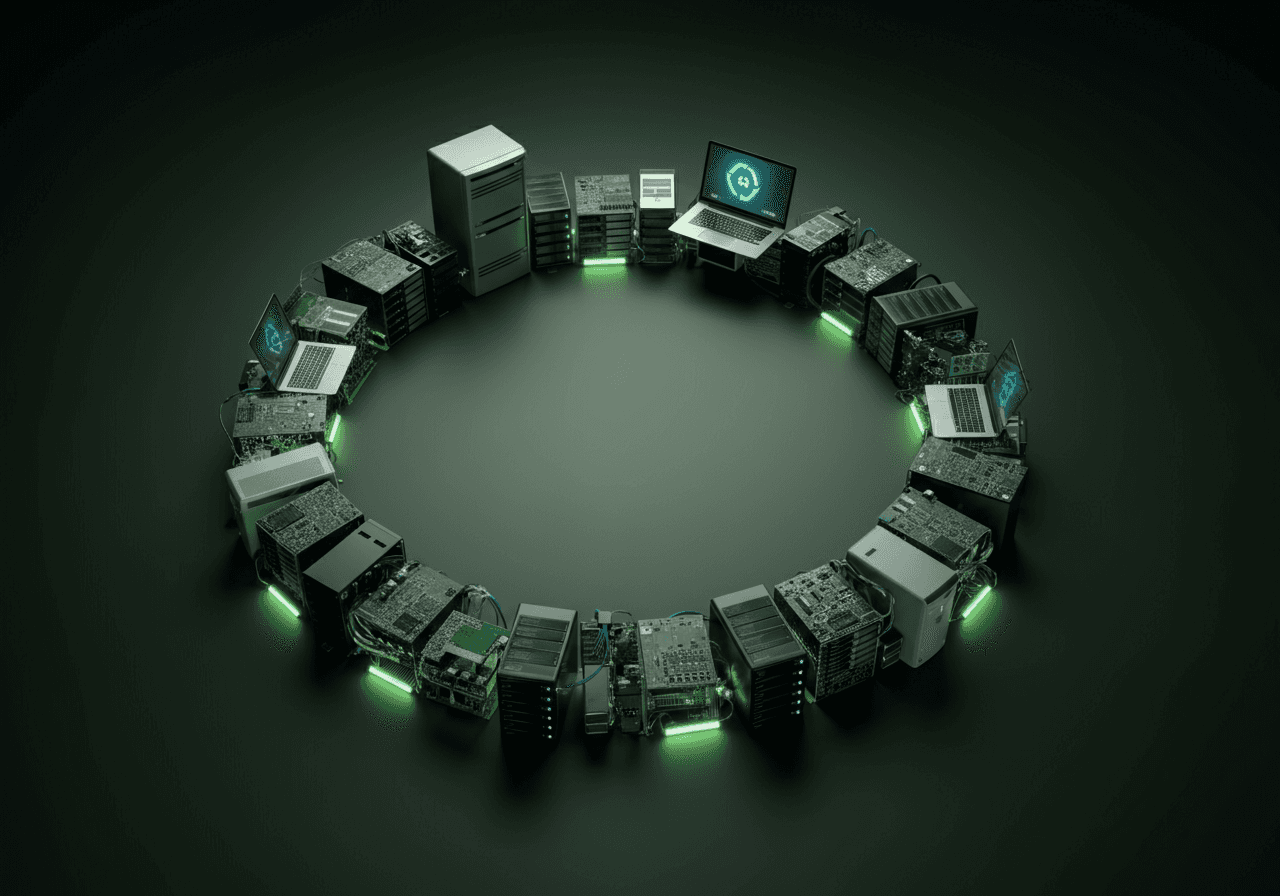
Circular IT lifecycle approach for modern companies
Discover why companies choose a circular IT lifecycle approach and how a Circular IT Lifecycle Partner improves sustainability and efficiency.
SAVE DCS

ICT Workplace Management: Cost-Efficient and Sustainable with Refurbished Workplaces
Discover how to manage workplaces smarter.
SAVE DCS

The 5 Phases of IT Lifecycle Management: Servers, Storage, Network and Workstations
How to Manage IT Cost-Effectively and Sustainably
SAVE DCS

How do you calculate the CO₂ emissions of your hardware?
You think you can calculate it quickly, until you see how much actually goes into it.
SAVE DCS

Circular Hardware Lifecycle Management: why 2025 is the tipping point for IT infrastructure
Will you keep wasting resources or move to proven circularity?
SAVE DCS

What War Has to Do with Circular IT
Circular IT is not just about sustainability, it is also about security and strategic autonomy.
SAVE DCS

CSRD and IT: How to Stay Compliant Today and Future-Proof for Tomorrow
CSRD IT Compliance: From Energy Reporting to Circular IT | SAVE DCS
SAVE DCS
3-12-2025
What IT Managers Get Wrong About Hardware Replacement
Discover what IT managers get wrong about hardware replacement and how a Circulat IT Lifeycle Partner helps make smarter decisions.
SAVE DCS
When people think about hardware replacement, it often feels like swapping out a car just because the windshield is dirty. Many companies replace equipment simply because “that’s how we’ve always done it.” But that doesn’t make it the right choice. In this article, we’ll look at the most common mistakes IT managers make, why those mistakes keep happening, and most importantly, how to fix them. Expect relatable examples, a clear explanation, and at least one analogy you’ll never forget.
Table of Contents
Sr# | Headings |
|---|---|
1 | Introduction: Why hardware replacement often goes wrong |
2 | The biggest myth: new is always better |
3 | The hidden price tag behind replacing equipment |
4 | Lack of insight into a device’s real condition |
5 | Blindly following standard refresh cycles |
6 | Missing performance and cost data |
7 | No plan for internal reuse |
8 | Overlooking data security during replacement |
9 | Thinking too late about recycling or value recovery |
10 | The solution: a lifecycle mindset |
11 | What a Circulat IT Lifeycle Partner does differently |
12 | Case example: the laptop that could last three more years |
13 | How to switch to smarter lifecycle management |
14 | Checklist for future-proof hardware replacement |
15 | Conclusion |
1. Introduction: Why hardware replacement often goes wrong
IT managers frequently replace hardware too early, too late, or without any real strategy. That’s a missed opportunity, because good hardware decisions save time, money, and stress.
With rising costs, security pressures, and remote work setups, the pressure to replace equipment grows. But hardware replacement doesn’t have to be chaotic, it just requires planning and clarity.
2. The biggest myth: new is always better
New hardware feels safe. It shines. It promises solutions.
But does it really?
Not always.
Modern hardware is built to last much longer than people assume. Replacing devices “just because they’re old” is like throwing away a bike because the chain squeaks.
Most of the time, maintenance or small upgrades do the job.
3. The hidden price tag behind replacing equipment
A new device seems simple. But the real cost includes:
migration
software licensing
configuration
user downtime
training or adaptation
An 800-euro laptop can easily cost over 1,500 euros once everything is included.
Replace too early, and you burn money without thinking.
4. Lack of insight into a device’s real condition
Many IT managers don’t have up-to-date data on:
disk health
battery wear
temperature issues
performance bottlenecks
unreported user problems
Without this information, replacement decisions become guesswork.
Sometimes you guess right. Often you don’t.
5. Blindly following standard refresh cycles
Three years for laptops. Five for servers.
It sounds familiar.
But where do these numbers come from?
From outdated industry reports and manufacturer recommendations created mostly to drive new sales. Modern hardware often lasts far longer, especially with proper lifecycle management.
A “cycle end” laptop can still be perfect for another department.
6. Missing performance and cost data
Data should guide hardware decisions, but often it doesn’t.
Without monitoring tools or reports, companies decide based on routine. With the right data you can see:
which devices slow down
repair vs. replacement costs
who is over-equipped or under-equipped
where risks appear
Facts make better decisions than habits.
7. No plan for internal reuse
A common mistake: replacing = discarding.
But much hardware still works perfectly fine.
Example:
A data analyst needs a faster laptop. His old device? Ideal for HR, finance, or sales.
Without internal reuse, you lose value instantly.
8. Overlooking data security during replacement
Many companies consider data wiping, chain-of-custody and audit trails only after the replacement process starts. That’s late.
Unsecure data handling can lead to legal trouble and reputational damage. This step should be planned up front, not at the end.
9. Thinking too late about recycling or value recovery
Many IT managers only look at:
rest value
refurbishment
recycling
after new hardware is already purchased.
But these factors should be part of the initial decision-making process. Otherwise you underestimate the true value still inside your equipment, and you leave money on the table.
10. The solution: a lifecycle mindset
The real fix is simple.
Stop thinking in purchases. Start thinking in lifecycles.
That means:
extending device lifespan
optimizing what you already have
repairing issues early
recovering value
ensuring safe disposal
Lifecycle thinking creates clarity and predictability.
11. What a Circulat IT Lifeycle Partner does differently
A Circulat IT Lifeycle Partner looks at the entire journey of your hardware:
inventory and technical health
performance and usage analysis
internal reuse possibilities
realistic market value
CO₂ and e-waste reduction
secure data wiping
planning for future cycles
It’s not just about replacing devices.
It’s about making smarter decisions.
12. Case example: the laptop that could last three more years
A company wanted to replace 180 laptops.
Why?
“They’re three years old.”
After a lifecycle assessment:
140 laptops were still in excellent condition
35 needed only a new battery
5 required replacement
Result:
90% cost reduction
85% less e-waste
smoother operations
lower environmental impact
A simple analysis saved thousands.
13. How to switch to smarter lifecycle management
Here is a practical transition plan:
1. Start with a real-time inventory.
Not assumptions, actual data.
2. Analyse device performance and wear.
Hardware tells the truth.
3. Assign realistic lifespans per device.
Avoid replacing everything at once.
4. Create an internal reuse strategy.
Spread value instead of losing it.
5. Replace based on necessity, not tradition.
Every device is different.
6. Work with a lifecycle-focused partner.
Someone who helps you think long-term.
14. Checklist for future-proof hardware replacement
Before replacing any device, ask:
Is this device truly end of life?
Are cheaper fixes possible?
Can this device be reused internally?
What is the current market value?
How much CO₂ do we save by extending it?
Is data removal secure and auditable?
Is replacement necessary or just habit?
Honest answers lead to better decisions.
15. Conclusion
IT managers want reliability, security, and performance.
Replacing hardware too fast doesn’t guarantee any of those things.
With lifecycle thinking, and the support of a Circulat IT Lifeycle Partner, hardware decisions become smarter, cheaper and more sustainable.
Hardware replacement doesn’t have to be a burden.
It can be a strategic advantage.
Frequently Asked Questions
1. Why do companies replace hardware too early?
Because they follow fixed schedules instead of looking at the real condition of devices.
2. How do I know if hardware can still last longer?
Use monitoring tools and a lifecycle assessment to check health and performance.
3. Is internal reuse really effective?
Yes. It saves money and reduces waste while keeping teams productive.
4. What does a Circulat IT Lifeycle Partner actually do?
They support the full lifecycle, inventory, analysis, reuse, value recovery, replacing, and secure data handling.
5. How do I avoid data risks when replacing hardware?
Use certified wiping methods, proper chain-of-custody and strict documentation.
Read more
Complete Guide to IT Lifecycle Management for IT Managers
Complete guide to IT lifecycle management. Discover phases, risks, trends and the role of a Circular IT Lifecycle Partner.
SAVE DCS
What IT Managers Get Wrong About Hardware Replacement
Discover what IT managers get wrong about hardware replacement and how a Circulat IT Lifeycle Partner helps make smarter decisions.
SAVE DCS
Circular IT lifecycle approach for modern companies
Discover why companies choose a circular IT lifecycle approach and how a Circular IT Lifecycle Partner improves sustainability and efficiency.
SAVE DCS
ICT Workplace Management: Cost-Efficient and Sustainable with Refurbished Workplaces
Discover how to manage workplaces smarter.
SAVE DCS
3-12-2025
What IT Managers Get Wrong About Hardware Replacement
Discover what IT managers get wrong about hardware replacement and how a Circulat IT Lifeycle Partner helps make smarter decisions.
SAVE DCS
When people think about hardware replacement, it often feels like swapping out a car just because the windshield is dirty. Many companies replace equipment simply because “that’s how we’ve always done it.” But that doesn’t make it the right choice. In this article, we’ll look at the most common mistakes IT managers make, why those mistakes keep happening, and most importantly, how to fix them. Expect relatable examples, a clear explanation, and at least one analogy you’ll never forget.
Table of Contents
Sr# | Headings |
|---|---|
1 | Introduction: Why hardware replacement often goes wrong |
2 | The biggest myth: new is always better |
3 | The hidden price tag behind replacing equipment |
4 | Lack of insight into a device’s real condition |
5 | Blindly following standard refresh cycles |
6 | Missing performance and cost data |
7 | No plan for internal reuse |
8 | Overlooking data security during replacement |
9 | Thinking too late about recycling or value recovery |
10 | The solution: a lifecycle mindset |
11 | What a Circulat IT Lifeycle Partner does differently |
12 | Case example: the laptop that could last three more years |
13 | How to switch to smarter lifecycle management |
14 | Checklist for future-proof hardware replacement |
15 | Conclusion |
1. Introduction: Why hardware replacement often goes wrong
IT managers frequently replace hardware too early, too late, or without any real strategy. That’s a missed opportunity, because good hardware decisions save time, money, and stress.
With rising costs, security pressures, and remote work setups, the pressure to replace equipment grows. But hardware replacement doesn’t have to be chaotic, it just requires planning and clarity.
2. The biggest myth: new is always better
New hardware feels safe. It shines. It promises solutions.
But does it really?
Not always.
Modern hardware is built to last much longer than people assume. Replacing devices “just because they’re old” is like throwing away a bike because the chain squeaks.
Most of the time, maintenance or small upgrades do the job.
3. The hidden price tag behind replacing equipment
A new device seems simple. But the real cost includes:
migration
software licensing
configuration
user downtime
training or adaptation
An 800-euro laptop can easily cost over 1,500 euros once everything is included.
Replace too early, and you burn money without thinking.
4. Lack of insight into a device’s real condition
Many IT managers don’t have up-to-date data on:
disk health
battery wear
temperature issues
performance bottlenecks
unreported user problems
Without this information, replacement decisions become guesswork.
Sometimes you guess right. Often you don’t.
5. Blindly following standard refresh cycles
Three years for laptops. Five for servers.
It sounds familiar.
But where do these numbers come from?
From outdated industry reports and manufacturer recommendations created mostly to drive new sales. Modern hardware often lasts far longer, especially with proper lifecycle management.
A “cycle end” laptop can still be perfect for another department.
6. Missing performance and cost data
Data should guide hardware decisions, but often it doesn’t.
Without monitoring tools or reports, companies decide based on routine. With the right data you can see:
which devices slow down
repair vs. replacement costs
who is over-equipped or under-equipped
where risks appear
Facts make better decisions than habits.
7. No plan for internal reuse
A common mistake: replacing = discarding.
But much hardware still works perfectly fine.
Example:
A data analyst needs a faster laptop. His old device? Ideal for HR, finance, or sales.
Without internal reuse, you lose value instantly.
8. Overlooking data security during replacement
Many companies consider data wiping, chain-of-custody and audit trails only after the replacement process starts. That’s late.
Unsecure data handling can lead to legal trouble and reputational damage. This step should be planned up front, not at the end.
9. Thinking too late about recycling or value recovery
Many IT managers only look at:
rest value
refurbishment
recycling
after new hardware is already purchased.
But these factors should be part of the initial decision-making process. Otherwise you underestimate the true value still inside your equipment, and you leave money on the table.
10. The solution: a lifecycle mindset
The real fix is simple.
Stop thinking in purchases. Start thinking in lifecycles.
That means:
extending device lifespan
optimizing what you already have
repairing issues early
recovering value
ensuring safe disposal
Lifecycle thinking creates clarity and predictability.
11. What a Circulat IT Lifeycle Partner does differently
A Circulat IT Lifeycle Partner looks at the entire journey of your hardware:
inventory and technical health
performance and usage analysis
internal reuse possibilities
realistic market value
CO₂ and e-waste reduction
secure data wiping
planning for future cycles
It’s not just about replacing devices.
It’s about making smarter decisions.
12. Case example: the laptop that could last three more years
A company wanted to replace 180 laptops.
Why?
“They’re three years old.”
After a lifecycle assessment:
140 laptops were still in excellent condition
35 needed only a new battery
5 required replacement
Result:
90% cost reduction
85% less e-waste
smoother operations
lower environmental impact
A simple analysis saved thousands.
13. How to switch to smarter lifecycle management
Here is a practical transition plan:
1. Start with a real-time inventory.
Not assumptions, actual data.
2. Analyse device performance and wear.
Hardware tells the truth.
3. Assign realistic lifespans per device.
Avoid replacing everything at once.
4. Create an internal reuse strategy.
Spread value instead of losing it.
5. Replace based on necessity, not tradition.
Every device is different.
6. Work with a lifecycle-focused partner.
Someone who helps you think long-term.
14. Checklist for future-proof hardware replacement
Before replacing any device, ask:
Is this device truly end of life?
Are cheaper fixes possible?
Can this device be reused internally?
What is the current market value?
How much CO₂ do we save by extending it?
Is data removal secure and auditable?
Is replacement necessary or just habit?
Honest answers lead to better decisions.
15. Conclusion
IT managers want reliability, security, and performance.
Replacing hardware too fast doesn’t guarantee any of those things.
With lifecycle thinking, and the support of a Circulat IT Lifeycle Partner, hardware decisions become smarter, cheaper and more sustainable.
Hardware replacement doesn’t have to be a burden.
It can be a strategic advantage.
Frequently Asked Questions
1. Why do companies replace hardware too early?
Because they follow fixed schedules instead of looking at the real condition of devices.
2. How do I know if hardware can still last longer?
Use monitoring tools and a lifecycle assessment to check health and performance.
3. Is internal reuse really effective?
Yes. It saves money and reduces waste while keeping teams productive.
4. What does a Circulat IT Lifeycle Partner actually do?
They support the full lifecycle, inventory, analysis, reuse, value recovery, replacing, and secure data handling.
5. How do I avoid data risks when replacing hardware?
Use certified wiping methods, proper chain-of-custody and strict documentation.
Read more
Complete Guide to IT Lifecycle Management for IT Managers
Complete guide to IT lifecycle management. Discover phases, risks, trends and the role of a Circular IT Lifecycle Partner.
SAVE DCS
What IT Managers Get Wrong About Hardware Replacement
Discover what IT managers get wrong about hardware replacement and how a Circulat IT Lifeycle Partner helps make smarter decisions.
SAVE DCS
Circular IT lifecycle approach for modern companies
Discover why companies choose a circular IT lifecycle approach and how a Circular IT Lifecycle Partner improves sustainability and efficiency.
SAVE DCS
ICT Workplace Management: Cost-Efficient and Sustainable with Refurbished Workplaces
Discover how to manage workplaces smarter.
SAVE DCS
The 5 Phases of IT Lifecycle Management: Servers, Storage, Network and Workstations
How to Manage IT Cost-Effectively and Sustainably
SAVE DCS
How do you calculate the CO₂ emissions of your hardware?
You think you can calculate it quickly, until you see how much actually goes into it.
SAVE DCS
Circular Hardware Lifecycle Management: why 2025 is the tipping point for IT infrastructure
Will you keep wasting resources or move to proven circularity?
SAVE DCS
What War Has to Do with Circular IT
Circular IT is not just about sustainability, it is also about security and strategic autonomy.
SAVE DCS
CSRD and IT: How to Stay Compliant Today and Future-Proof for Tomorrow
CSRD IT Compliance: From Energy Reporting to Circular IT | SAVE DCS
SAVE DCS